
Introduction to Criminal Law
View whole Act Statutory instruments Turn history notes on Legislative history Search Act Results: match 0 of 0 provisions. Previous Hit Next Hit . Return to search results Clear search. 0 hits in page: First Last . Crimes (Sentencing Procedure) Act 1999 No 92. Site footer. We acknowledge the traditional owners of this land and pay respect to.
(DOC) Essay Section 3A of the Section 3A of the Crimes (Sentencing Procedure) Act 1999 outlines

CRIMES (SENTENCING PROCEDURE) ACT 1999 - SECT 3A Purposes of sentencing 3A Purposes of sentencing . The purposes for which a court may impose a sentence on an offender are as follows-- (a) to ensure that the offender is adequately punished for the offence, (b) to prevent crime by deterring the offender and other persons from committing similar offences, (c) to protect the community from the.
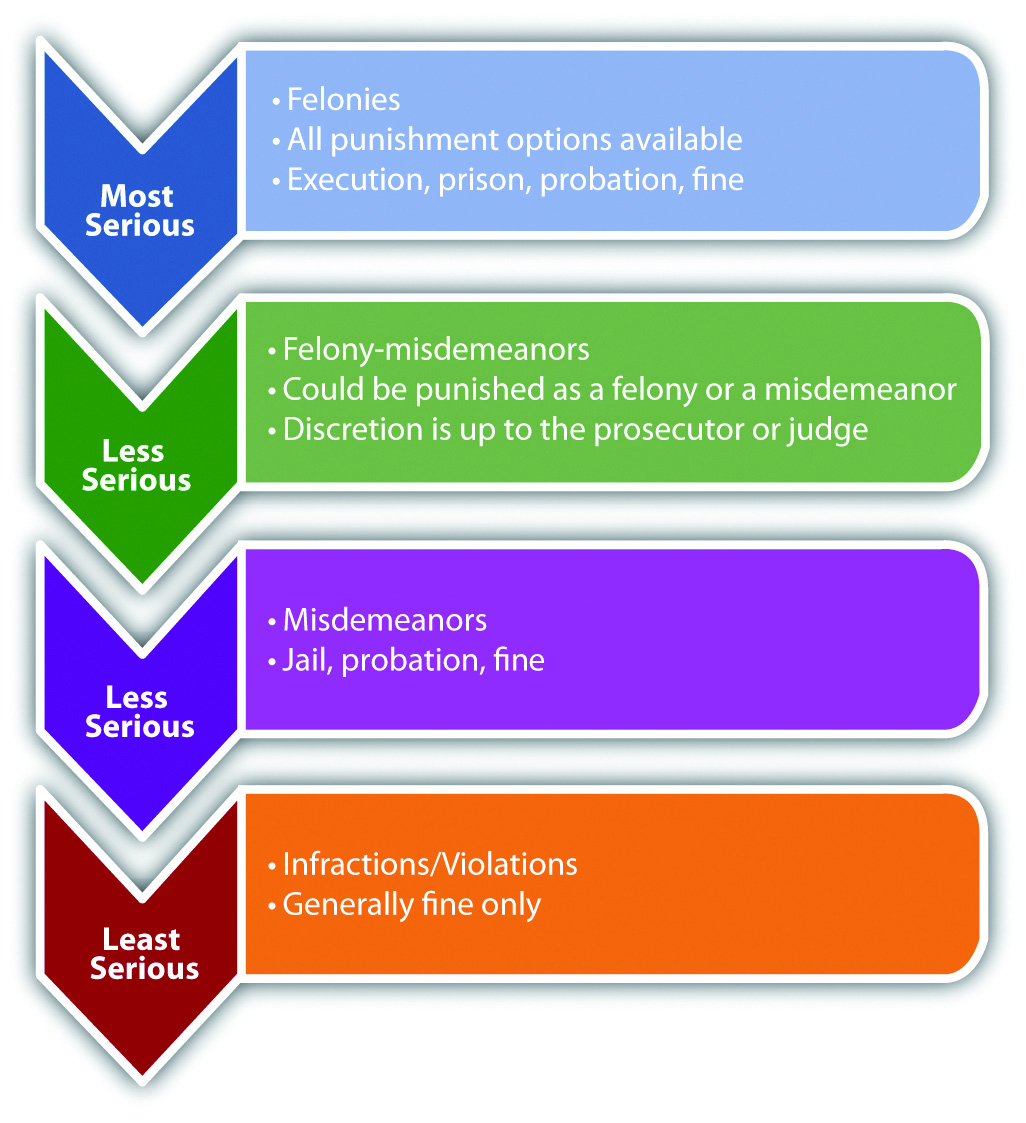
1.4 Classification of Crimes Criminal Law
Crimes (Sentencing and Restorative Justice) Amendment Act 2016. pt 2. 2 March 2016. A2015-40. Crimes (Domestic and Family Violence) Legislation Amendment Act 2015. sch 1 pt 1.7. 4 May 2016.
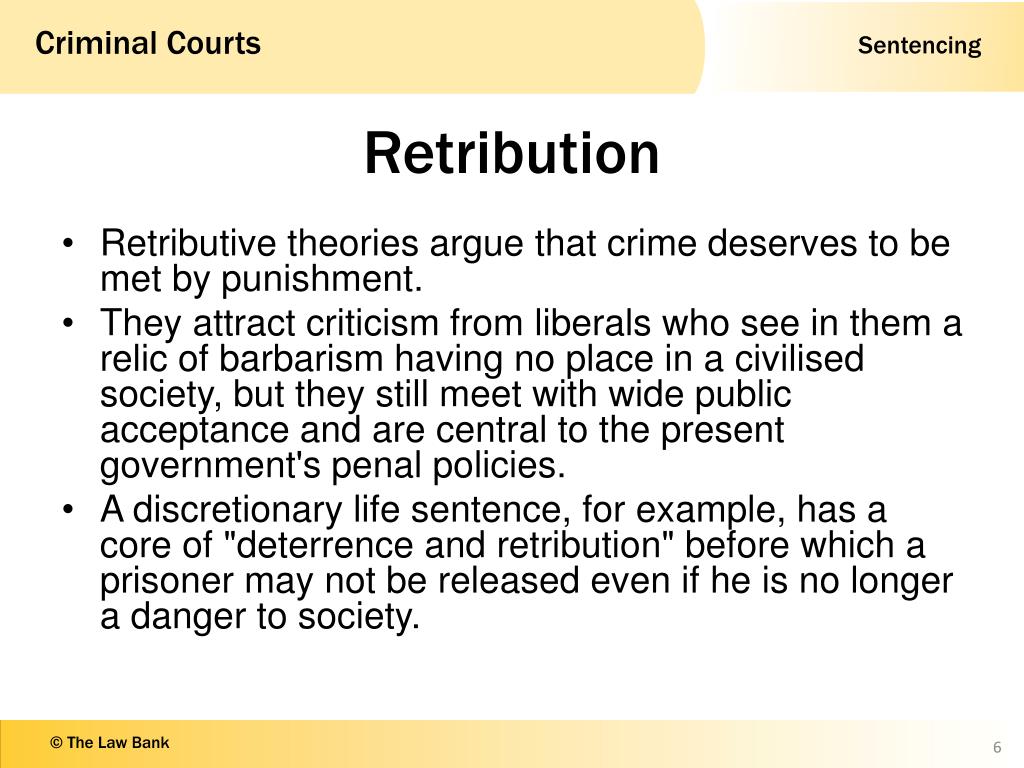
PPT The Criminal Courts Procedure and Sentencing PowerPoint Presentation ID2337650
Sentencing patterns and practices. 22. Guilty plea to be taken into account for offences not dealt with on indictment. 22A. Power to reduce penalties for facilitating the administration of justice. 23. Power to reduce penalties for assistance provided to law enforcement authorities. 24. Court to take other matters into account.
Criminal Law and Procedure Handbook, 2nd Edition by Brianna Chesser, Paperback, 9780455240336
Crimes (Sentencing Procedure) Act 1999 No 92 Current version for 14 July 2023 to date (accessed 1 May 2024 at 15:25) Status information Status Information Currency of version Current version for 14 July 2023 to date (accessed 1 May 2024 at 15:25) Legislation on this site is usually updated within 3 working days after a change to the legislation.
Crimes (Sentencing Procedure) Act 1999 No 92 Section 21A PDF Crime & Violence Crimes

CRIMES (SENTENCING PROCEDURE) ACT 1999 - SECT 10 Dismissal of charges and conditional discharge of offender 10 Dismissal of charges and conditional discharge of offender (1) Without proceeding to conviction, a court that finds a person guilty of an offence may make any one of the following orders-- (a) an order directing that the relevant charge be dismissed,
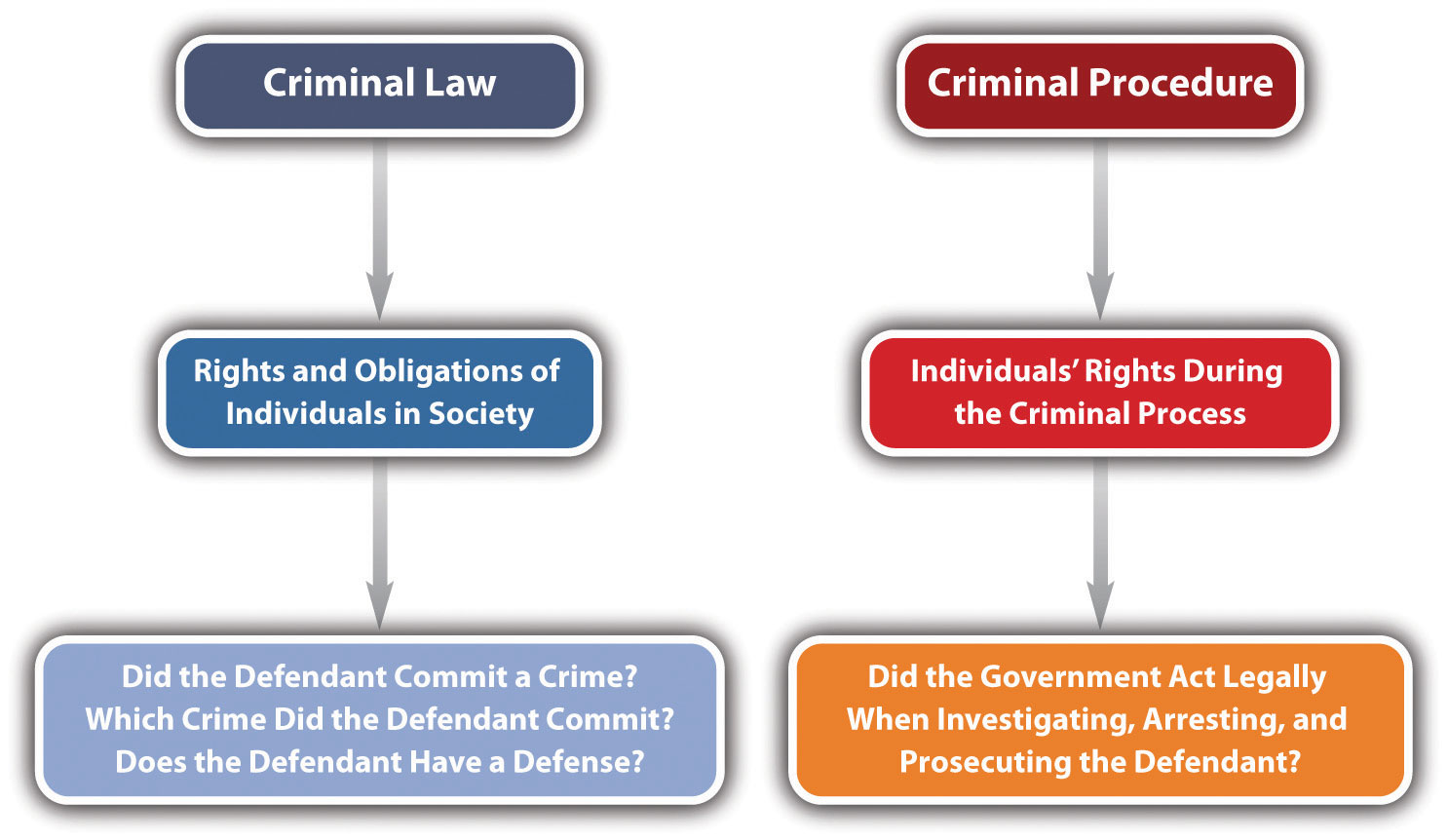
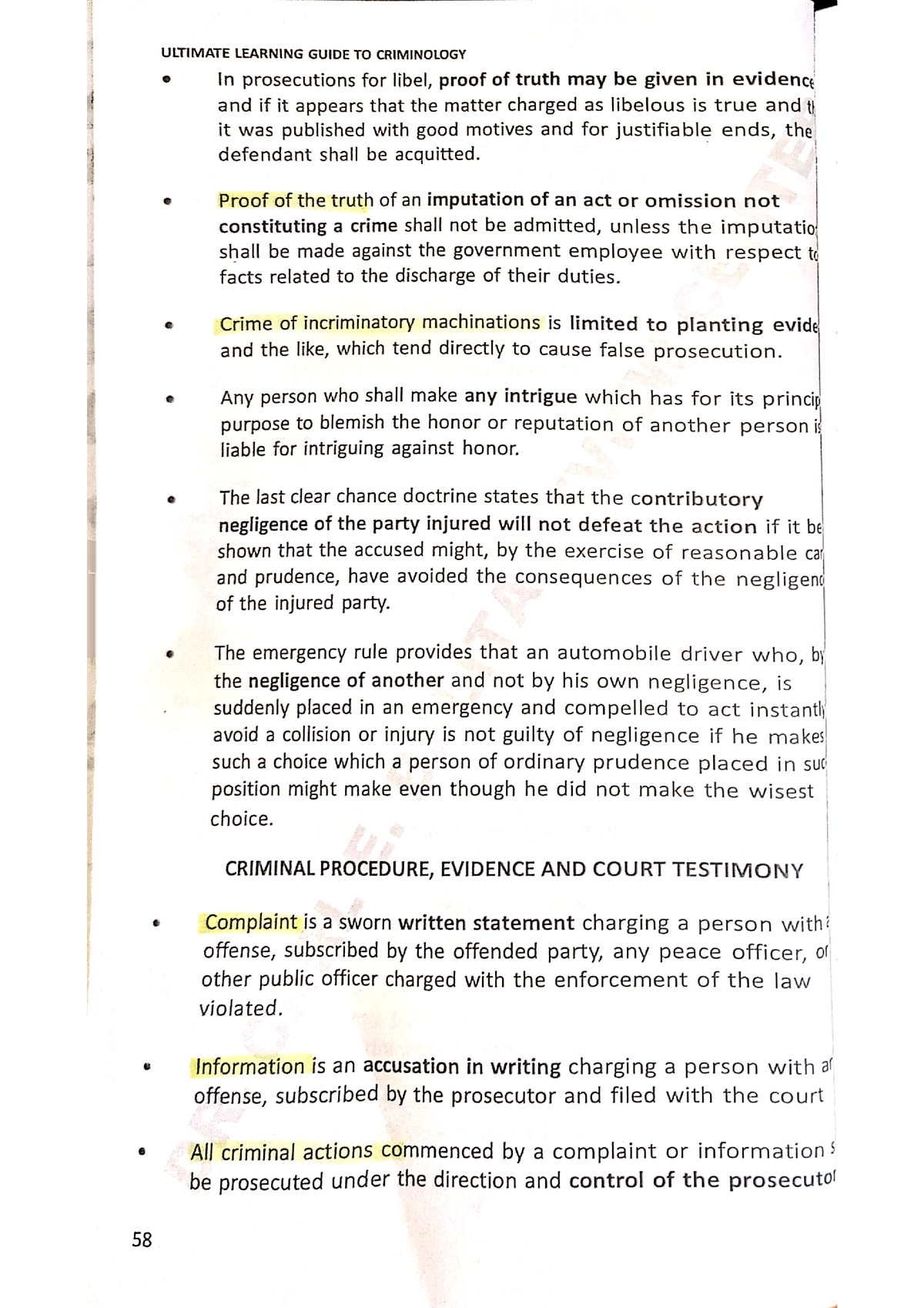
Criminal Procedure, Evidence AND Court Testimony Bs Criminology Studocu
Section 1 Crimes (Sentencing Procedure) Act 1999 No 92 Part 1 Preliminary Page 2 The Legislature of New South Wales enacts: Part 1 Preliminary 1 Name of Act This Act is the Crimes (Sentencing Procedure) Act 1999. 2 Commencement This Act commences on a day or days to be appointed by proclamation. 3 Interpretation (1) In this Act:
Procedure to Trial Criminal Courts The Law Bank The Criminal Courts Procedure and Sentencing

Go to Open Meetings The Open Meetings Act (OMA) took effect January 1, 1977. In enacting the OMA, the Legislature promoted a new era in governmental accountability and fostered openness in government to enhance responsible decision making.1 Nothing in the OMA prohibits a public body from adopting an ordinance, resolution, rule, or charter provision that requires a greater degree of openness.
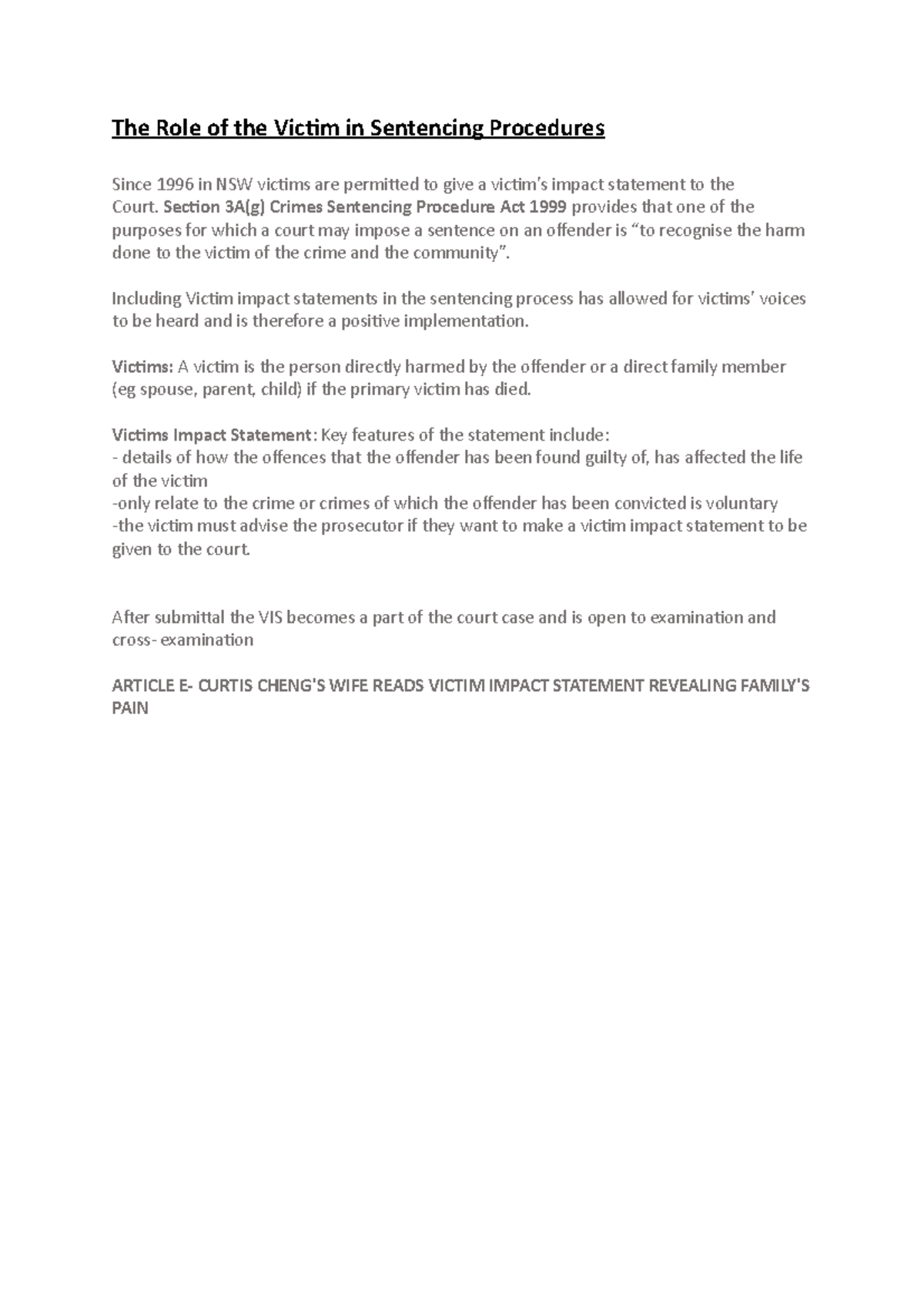
The Role of the Victim in Sentencing Procedures Section 3A(g) Crimes Sentencing Procedure Act
CRIMES (SENTENCING PROCEDURE) ACT 1999 - SECT 35A Consultation with victim and police in relation to charge negotiations 35A Consultation with victim and police in relation to charge negotiations (1) In this section--
Know The process Placer County, CA
1A. Murder—where the victim was a police officer, emergency services worker, correctional officer, judicial officer, council law enforcement officer, health worker, teacher, community worker, or other public official, exercising public or community functions and the offence arose because of the victim's occupation or voluntary work. 25 years.
Sentencing Principles EBC Webstore

The Attorney General (NSW) applied for a guideline judgment in Attorney General's Application under s 37 of the Crimes (Sentencing Procedure) Act 1999 No 1 of 2002 (2002) 56 NSWLR 146 (the Guideline) on the basis there was a need for a guideline setting out the proper approach to be taken by sentencing courts when Form 1 matters were under.
Fillable Online Crimes (Sentencing Procedure) Amendment Fax Email Print pdfFiller
Parole Authority means the State Parole Authority constituted under the Crimes (Administration of Sentences) Act 1999. sentencing legislation means the Crimes (Sentencing Procedure) Act 1999 and the Crimes (Administration of Sentences) Act 1999 as respectively in force at any relevant time. Division 2 Existing bonds and orders.
Who Decides Sentencing in Criminal Cases?

Part 4, Div 2 Crimes (Sentencing Procedure) Act 1999 (ss 55-60) contains provisions relating to the imposition of concurrent and consecutive sentences of imprisonment. It is convenient to explain here what DA Thomas first coined in his Principles of Sentencing, 2nd ed, 1979, Heinemann, London at p 56 as "the totality principle" (see A Ashworth, Sentencing and Criminal Justice, 4th ed.
The Preparation of Evidence for Use in Sentencing in NSW Under Section 21 of The Crimes

Crimes (Sentencing Procedure) Act 1999 No 92 [NSW] Current version for 14 July 2023 to date (accessed 3 May 2024 at 21:03) Page 73 of 159 (a1) a sentence of imprisonment imposed on an offender in relation to an offence involving an assault, or any other offence against the person, against a juvenile
Report On Section 342A Of The Criminal Procedure Act, 1977

CRIMES (SENTENCING PROCEDURE) ACT 1999 - SECT 8 Community correction orders 8 Community correction orders (1) Instead of imposing a sentence of imprisonment on an offender, a court that has convicted a person of an offence may make a community correction order in relation to the offender. (2) A community service work condition must not be imposed on a community correction order made in.
Crimes (Sentencing Procedure) Act 1999whole Provisions in force The provisions displayed in

Section 3A Crimes (Sentencing Procedure) Act 1999 sets out the purposes for which a court can impose a sentence. Given that s 3A does not depart from the common law (see further below), the starting point for any discussion of the purposes of punishment must be Veen v The Queen (No 2) (1988) 164 CLR 465 where Mason CJ, Brennan, Dawson and Toohey JJ said at 476:
.