
Do Not Stand at My Grave and Weep Poem by Mary Elizabeth Frye Etsy UK
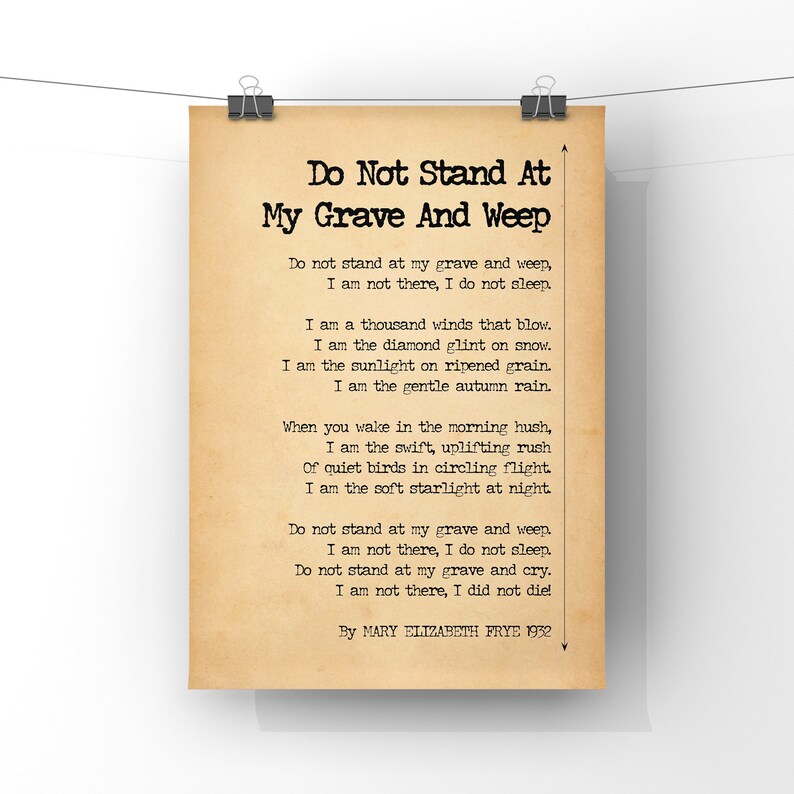
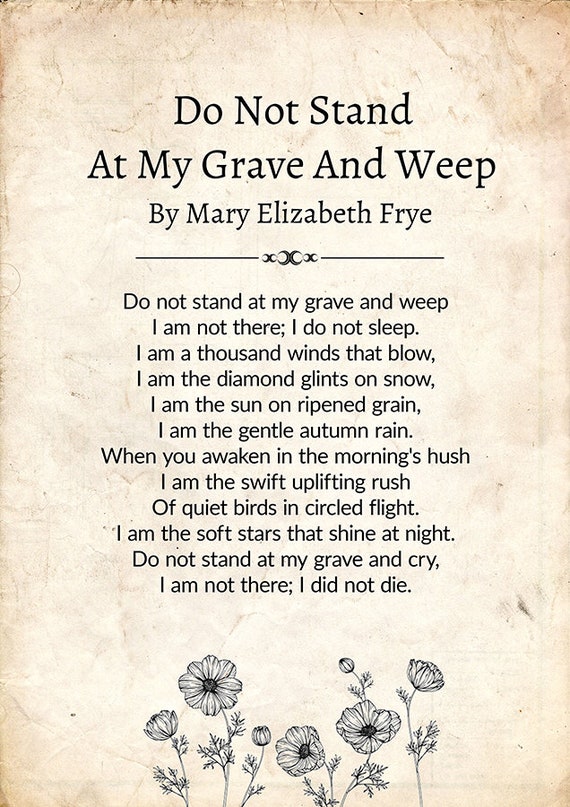
by Mary Elizabeth Frye. Do not stand at my grave and weep, I am not there; I do not sleep. I am a thousand winds that blow, I am the diamond glints on snow, I am the sun on ripened grain, I am the gentle autumn rain. When you awaken in the morning's hush. I am the swift uplifting rush.
Do Not Stand at My Grave and Weep Poem Mary Elizabeth Frye Etsy
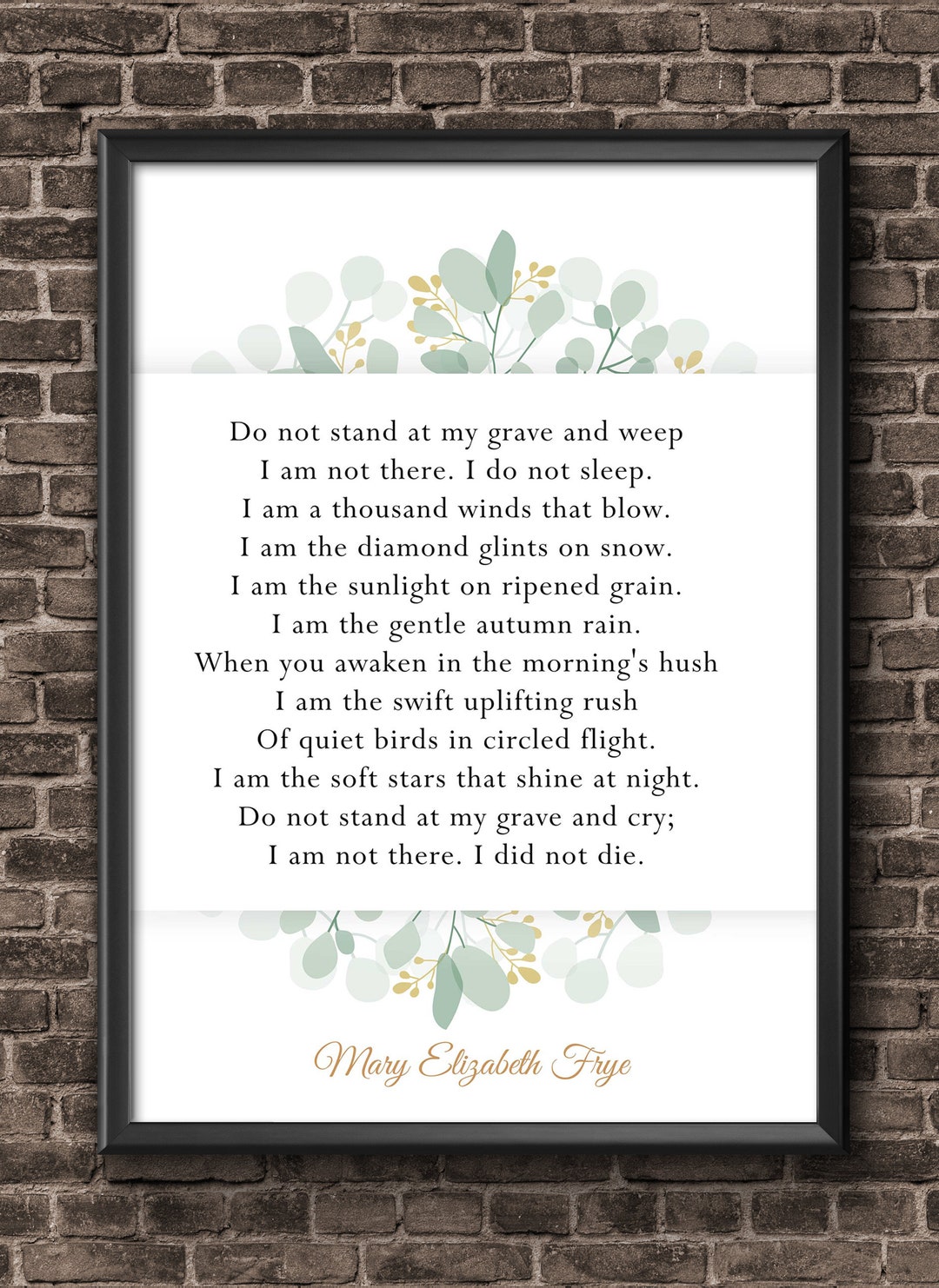
DO NOT STAND AT MY GRAVE AND WEEP. Do not stand at my grave and weep. am not there; I do not sleep. am a thousand winds that blow, am the diamond glints on snow. am the sun on ripened grain, am the gentle autumn rain. When you awaken in the morning's hush, am the swift uplifting rush Of quiet birds in circled flight.
Printable Do Not Stand At My Grave And Weep Poem Printable Word Searches
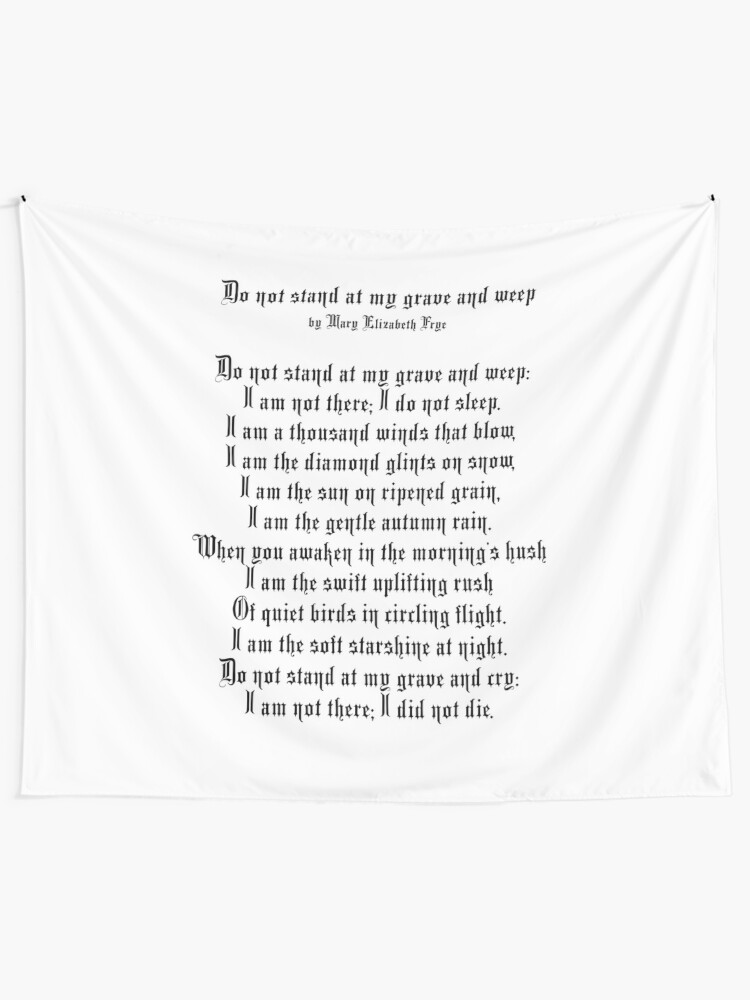
Language: English. Do not stand at my grave and weep, I am not there, I do not sleep. I am in a thousand winds that blow, I am the softly falling snow. I am the gentle showers of rain, I am the fields of ripening grain. I am in the morning hush, I am in the graceful rush Of beautiful birds in circling flight, I am the starshine of the night.
Do Not Stand At My Grave And Weep Mary Elizabeth Frye Poem Literature Typewriter Print 2
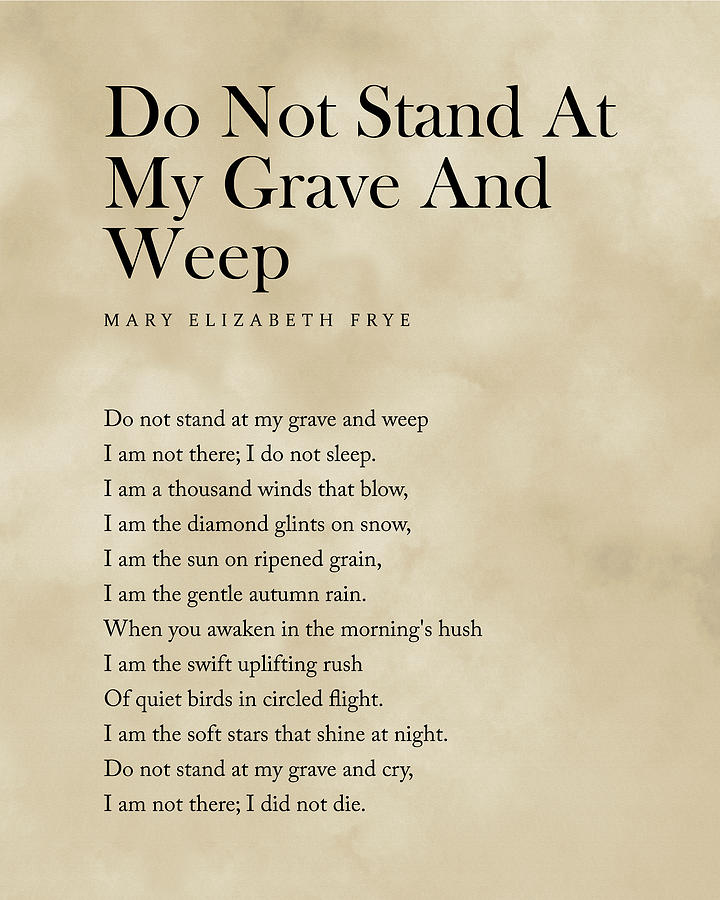
The popular bereavement poem "Immortality (Do not stand at my grave and weep)" presents death as a kind of transformation rather than an ending. The speaker declares, from beyond the grave, that they've become part of the natural world and now exist in its "winds," "snow," "rain," etc. As such, their loved ones shouldn't "weep" by their burial.
Do Not Stand at My Grave and Weep Poem by Mary E Frye Etsy

Do not stand By my grave, and weep, I am not there, I do not sleep--I am the thousand winds that blow, I am the diamond glints in snow. I am the sunlight on ripened grain, I am the gentle, autumn rain. As you awake with morning's hush, I am the swift, up-flinging rush Of quiet birds in circling flight. I am the day transcending night. Do not stand By my grave, and cry-- I am not there, I did.
Do Not Stand at My Grave and Weep by Mary Elizabeth Fryejpg Poesia, Buonanotte

I am the sunlight on ripened grain. I am the gentle autumn rain. When you wake in the morning hush, I am the swift, uplifting rush. Of quiet birds in circling flight. I am the soft starlight at night. Do not stand at my grave and weep. I am not there, I do not sleep. (Do not stand at my grave and cry.
Do Not Stand At My Grave And Weep Poem by Mary Elizabeth Frye Poem Hunter Weeping, Mary

Do not stand at my grave and weep. I am not there. I do not sleep. I am a thousand winds that blow. I am the diamond glints on snow. I am the sunlight on ripened grain. I am the gentle autumn rain. When you awaken in the morning's hush. I am the swift uplifting rush.
Do Not Stand At My Grave And Weep By Mary Elizabeth Frye Words of wisdom, Words, Weeping

Mary Frye is an American poet best known for the piece 'Do Not Stand at My Grave and Weep.'. She was born on November 13, 1905 in Dayton. In this touching poem, 'Do Not Stand at My Grave and Weep', by Mary Frye, she speaks of death in a welcoming tone. She offers words of comfort for those who would mourn for her at her passing, and she.
Do Not Stand at My Grave and Weep The Story of Mary Frye's Poem HighExistence
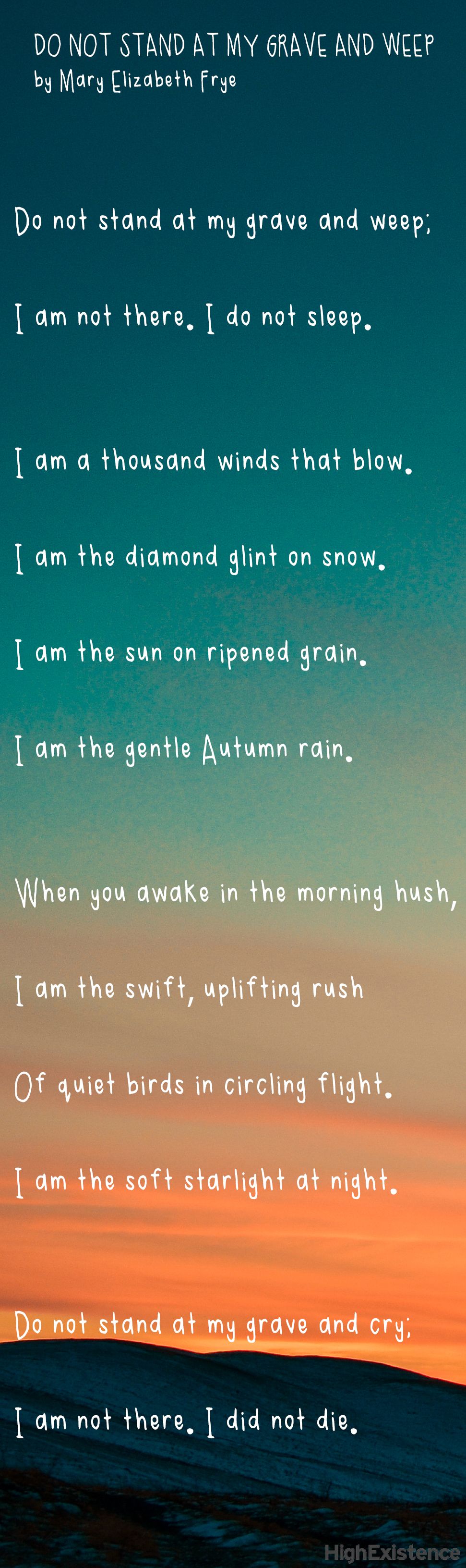
Analysis: "Do Not Stand at My Grave and Weep". While countless variants and interpretations of "Do Not Stand By My Grave and Weep" continue to appear, the 1934 publication entitled "Immortality" stands as the earliest printed version. Its effect as a poem of consolation resonates outside academic or even artistic contexts.
Do Not Stand at My Grave and Weep Poem Mary Elizabeth Frye Etsy Australia
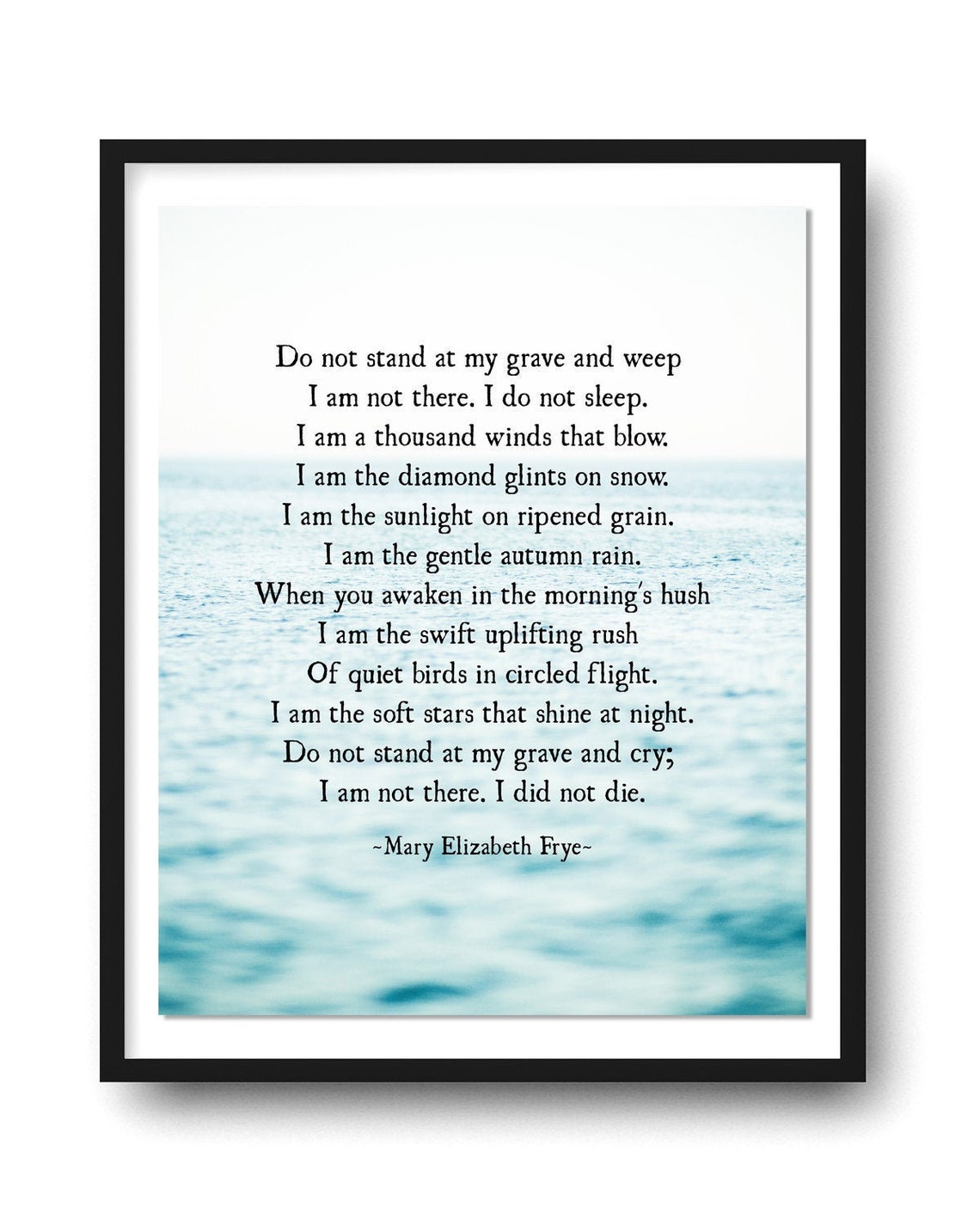
Do Not Stand at My Grave and Weep Analysis. "Do Not Stand at My Grave and Weep" is a simple monologue, a monologue between the spirit of the dead person and her loved ones. The structure of the monologue provides a sense of relief between the spirit and her loved ones. The rhyme scheme in the poem is AABB; every two lines rhyme with each other.
Do Not Stand at My Grave and Weep Poem by Mary Elizabeth Frye Etsy UK
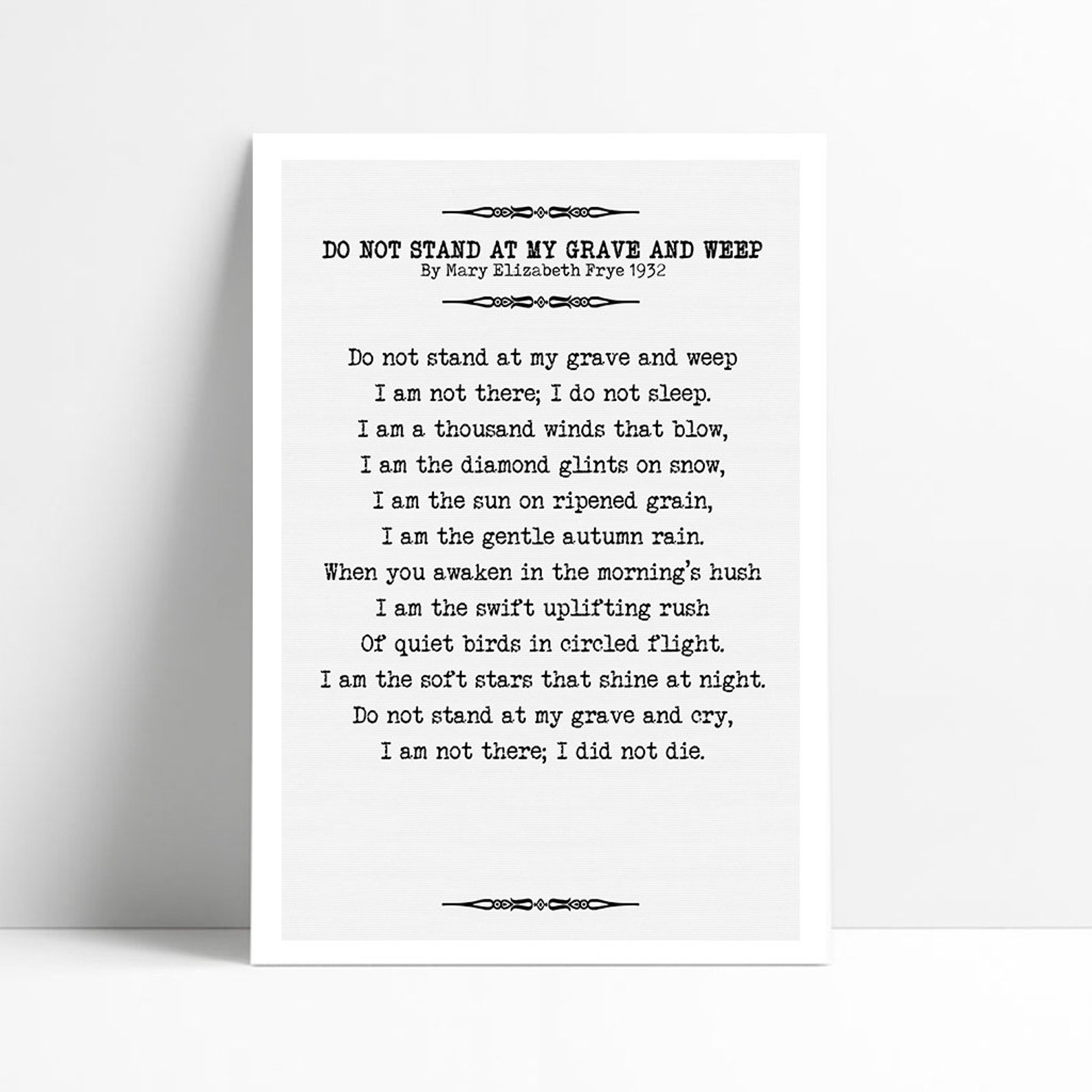
Subscribe for $3 a Month. "Do Not Stand at My Grave and Weep" reflects a divine order manifest in nature, mirroring the seasons' natural progression in Lines 5 through 8 and the cycle of night to day in Line 12. In recasting themself as various elements within the natural world, the speaker of the poem confirms death itself as a part of.
Do Not Stand at My Grave and Weep Poem by Mary E Frye Etsy
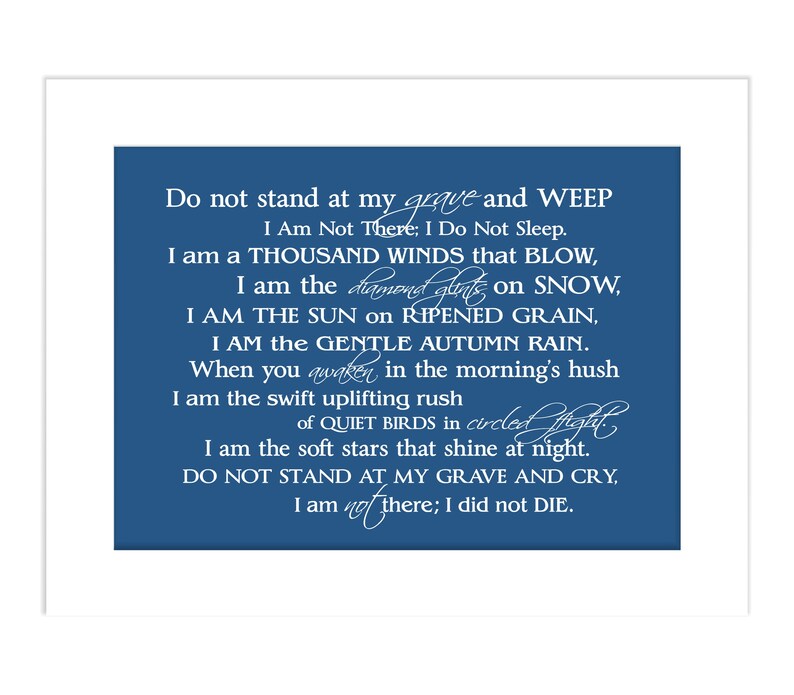
Do not stand at my grave and weep / I am not there. I do not sleep. / I am a thousand winds that blow. / I am the diamond glints on snow. / I am the sunlight on ripened grain. / I
Do Not Stand At My Grave And Weep, by Mary Elizabeth Frye Literica
By Dr Oliver Tearle (Loughborough University) 'Do not stand at my grave and weep' - or, more accurately, 'Do not stand by my grave and weep' - are the opening words of a much-loved poem whose official title is 'Immortality'.The poem was written by the American poet Clare Harner (1909-77) and published in The Gypsy magazine in December 1934.
Do not stand at my grave and weep mary elizabeth frye glamdarelo
Poems and literature are a powerful way to express one's thoughts and feel heard without needing to find your own words. With so many popular funeral poems, one, in particular, stands out.The poem "Do Not Stand at My Grave and Weep" by Mary Elizabeth Frye has impacted readers across the globe.
Wall Art, Art Print, Poetry Print, Literary Print, Do Not Stand at My Grave and Weep

Popularity of "Do Not Stand at My Grave and Weep": Written by Mary Elizabeth Frye, a not-so-popular American writer and poet, "Do Not Stand at My Grave and Weep" is a suggestive poetic piece.The poem revolves around the idea of death and the afterlife. It alludes to the idea that the soul lives on after death, and suggests that one should find comfort in their faith and belief in the.
"Do not stand at my grave and weep" Mary Elizabeth Frye [1600 x 1200] [OC] Mary elizabeth

One of the most popular bereavement poems in English, "Do Not Stand at My Grave and Weep" holds even more allure for its mysterious origins and many reinventions. A traditional, rhyming anti-elegy, the poem uses imagery and metaphor commonly associated with death and rebirth. The poem's voice, a direct address, reaches out to readers in.
.