
Genghis Khan History, Life, Conquests, and Legacy Facts & Worksheets
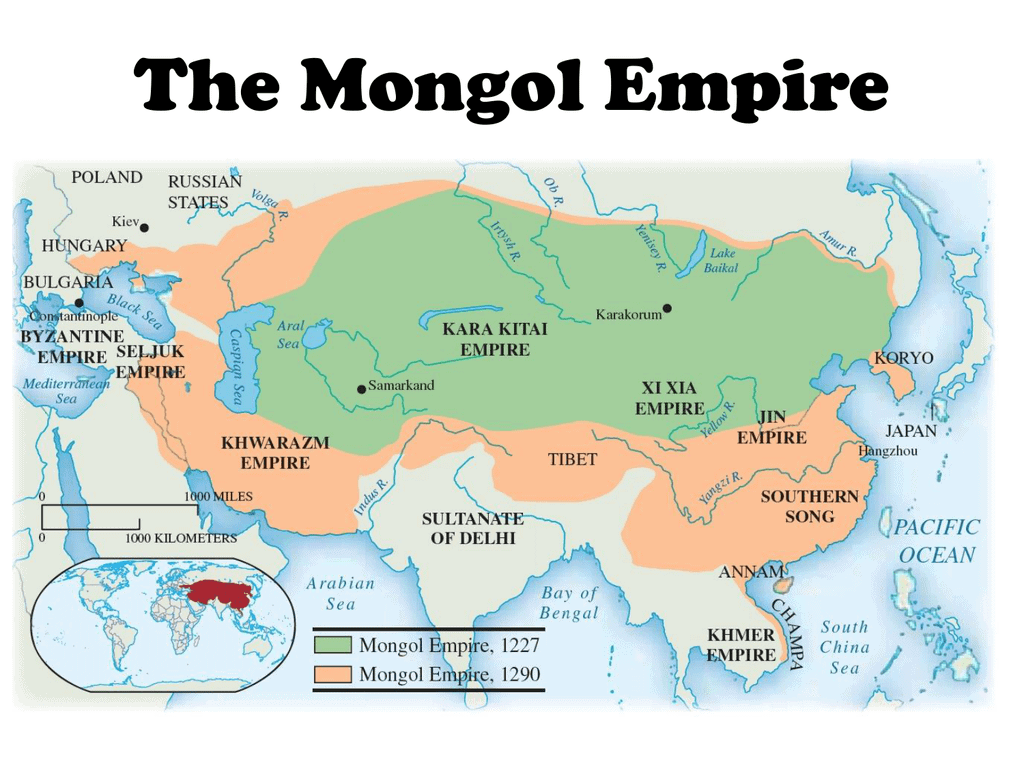
The Mongol Empire (1206-1368) was founded by Genghis Khan (r. 1206-1227), first Great Khan or 'universal ruler' of the Mongol peoples. Genghis forged the empire by uniting nomadic tribes of the Asian steppe and creating a devastatingly effective army with fast, light, and highly coordinated cavalry. Eventually, the empire dominated Asia from.
The Brutal Conquest Ever Genghis Khan What Insider
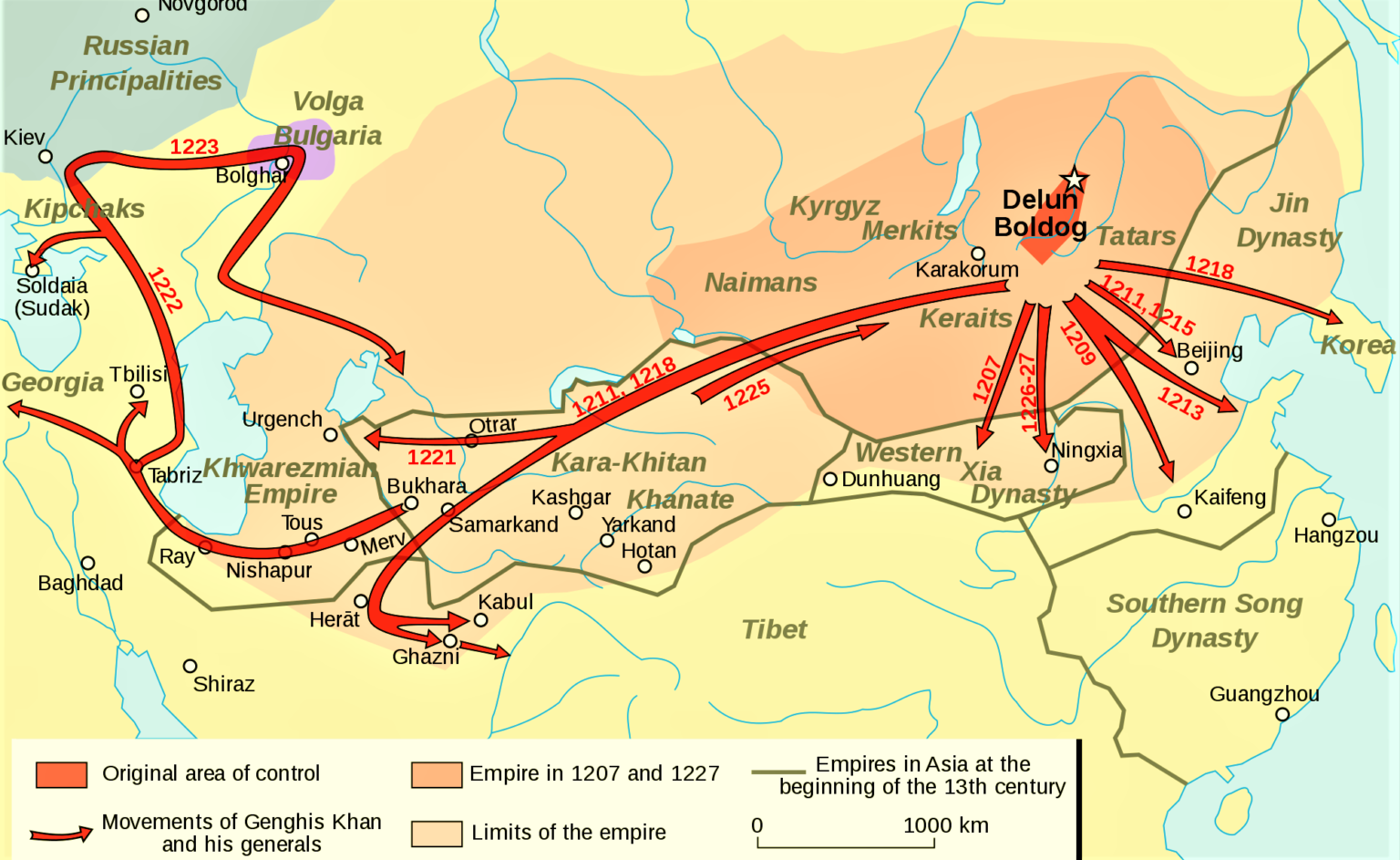
Genghis Khan, born Temüjin around 1162 and dying on 25 August 1227, founded and led the Mongol Empire from 1206 until his death. Under his leadership, the empire expanded to become the largest contiguous empire in history. His early life was marked by hardship, including his father's death when he was eight and subsequent abandonment by his tribe.
PPT Section 2 Mongol & Ming empires PowerPoint Presentation ID5831382
Grand Empress Börte (left) and Genghis Khan, more accurately called Chinggis Khan, from a 16th-century book commissioned by Mughal emperor Akbar the Great, who claimed descent from the khan.
Expansion of Mongol Empire in 13th Century [2438x1662] r/MapPorn
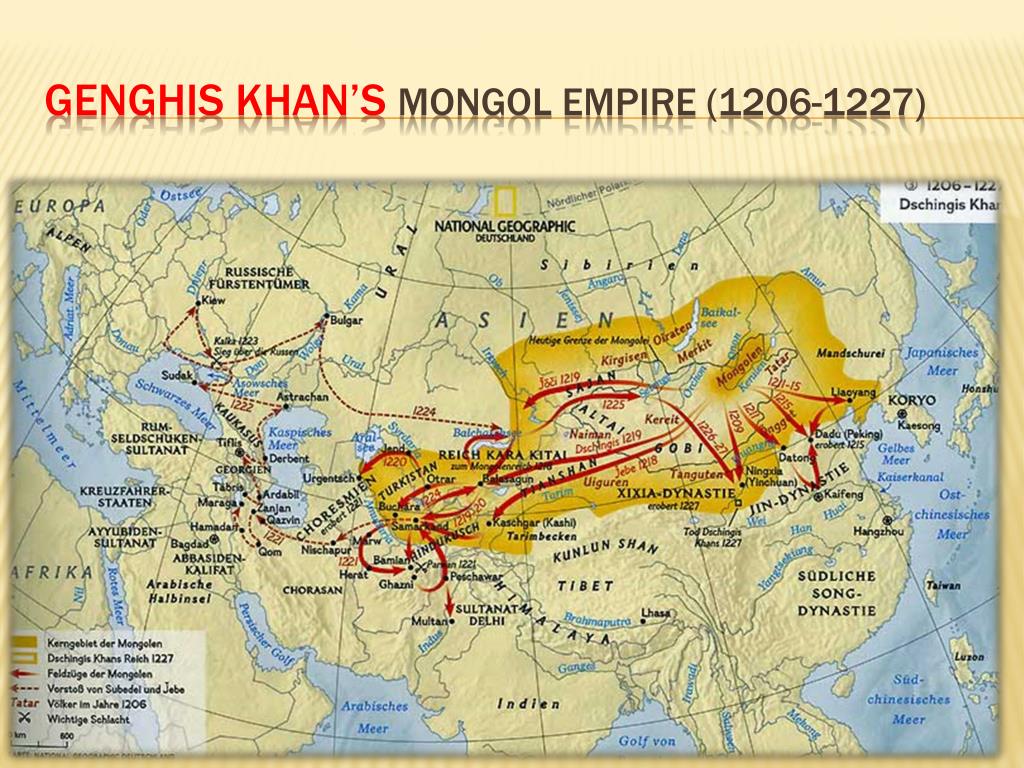
Map of A map of Asia showing the Empire of Genghis Khan (1206-1227) and the subsequent expansions by his descendants during the 13th century. The map is color-coded to show the territory under the control of Genghis Khan, the expansion in the east of his grandson Kublai Khan (1260-1294), the Empire of Djagatai (Chagatai), the Empire of the Golden Horde (Djoudji and descendents), the expansion.
The Mongols and modern European history Stephen Hicks, Ph.D.
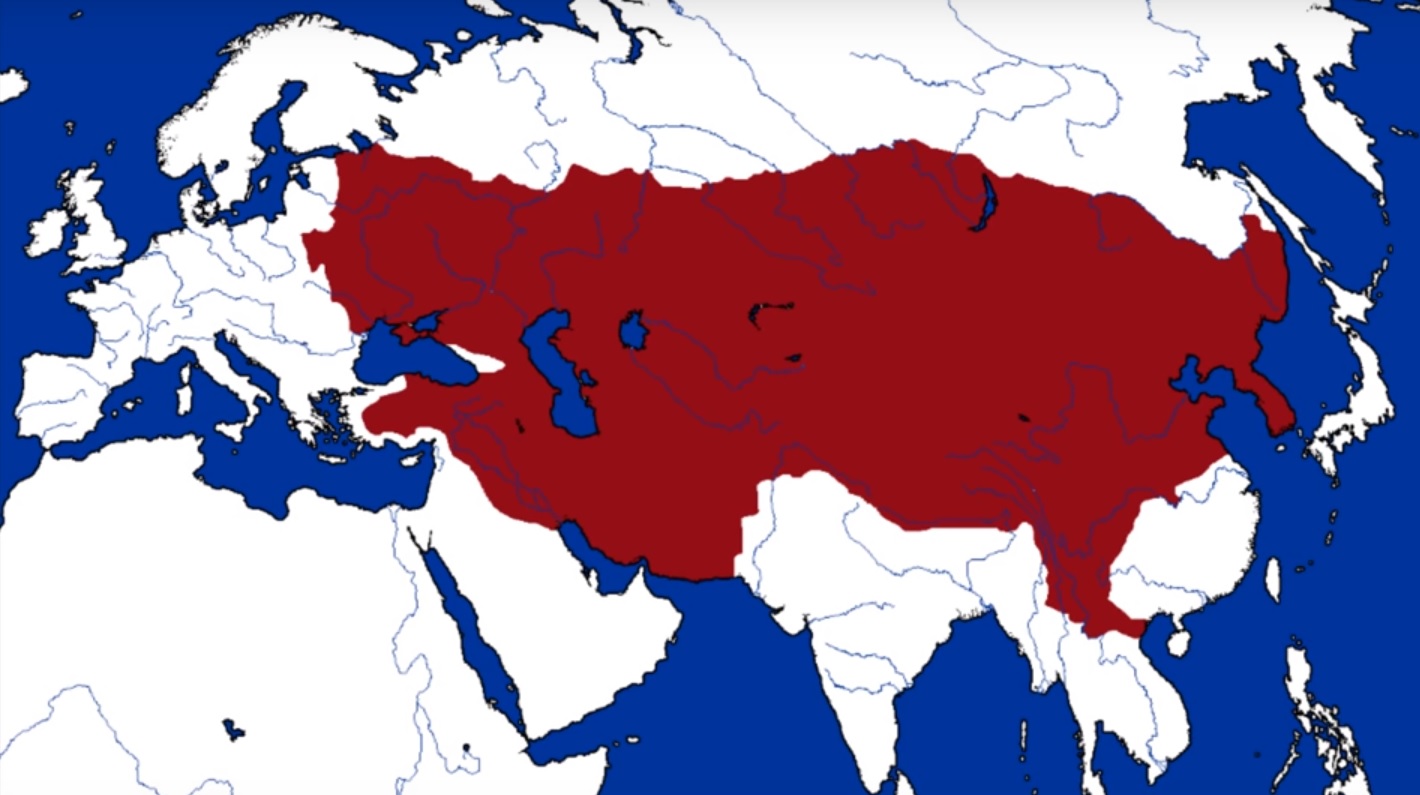
In 1200, Genghis Khan began to unite the scattered Mongol tribes before rapidly expanding his territory across Asia and establishing the World's most extensive empire in the process. However, his Empire would split after his death, causing Mongol power to recede to the Steppes by 1394. Below the animated map of the growth of the Mongol Empire.
The Mongol Empire of Genghis Khan, Watch The Rise and Fall Tony Mapped It
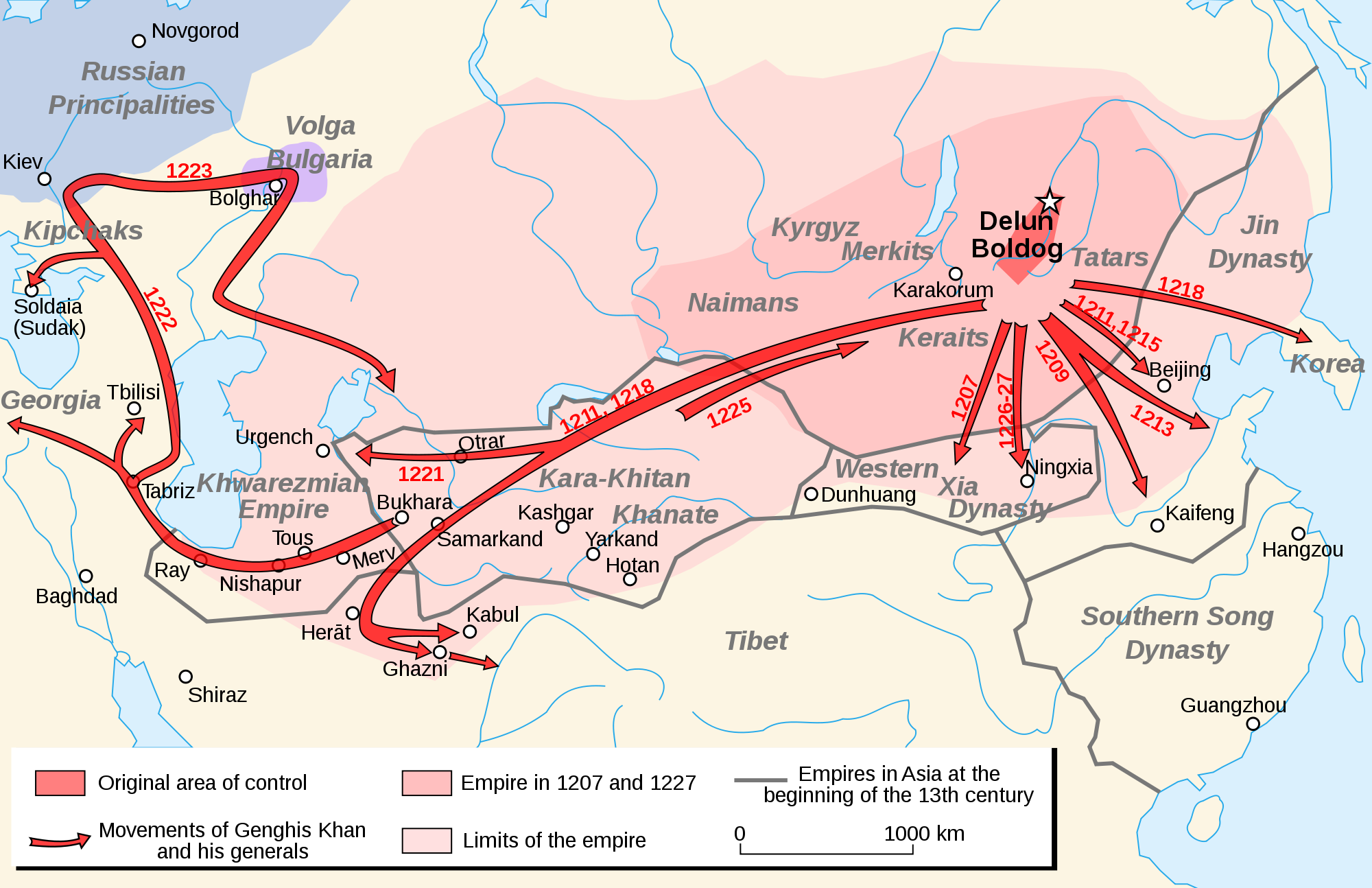
A map of the Mongol Empire at its greatest extent, showing capitals and major cities. A map of the Mongol Empire at its greatest extent, showing capitals and major cities. Membership No ads.. A map illustrating the military campaigns of Genghis Khan (c. 1162/67-1227.
The Mongols
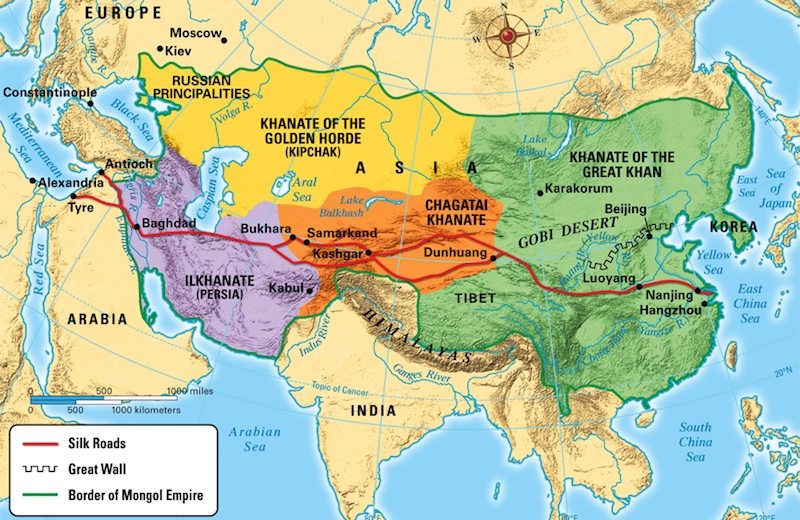
An empire arose in the steppes of Mongolia in the thirteenth century that forever changed the map of the world, opened intercontinental trade, spawned new nations, changed the course of leadership in two religions, and impacted history indirectly in a myriad of other ways.At its height, the Mongol Empire was the largest contiguous empire in
Genghis Khan Facts & DIY Ancient Art, Ancient History, Ancient Rome, Historical Pictures

Mongol leader Genghis Khan (1162-1227) rose from humble beginnings to establish the largest land empire in history. After uniting the nomadic tribes of the Mongolian plateau, he conquered huge.
Map of Genghis Khan Empire in the 13th Century Poster Zazzle
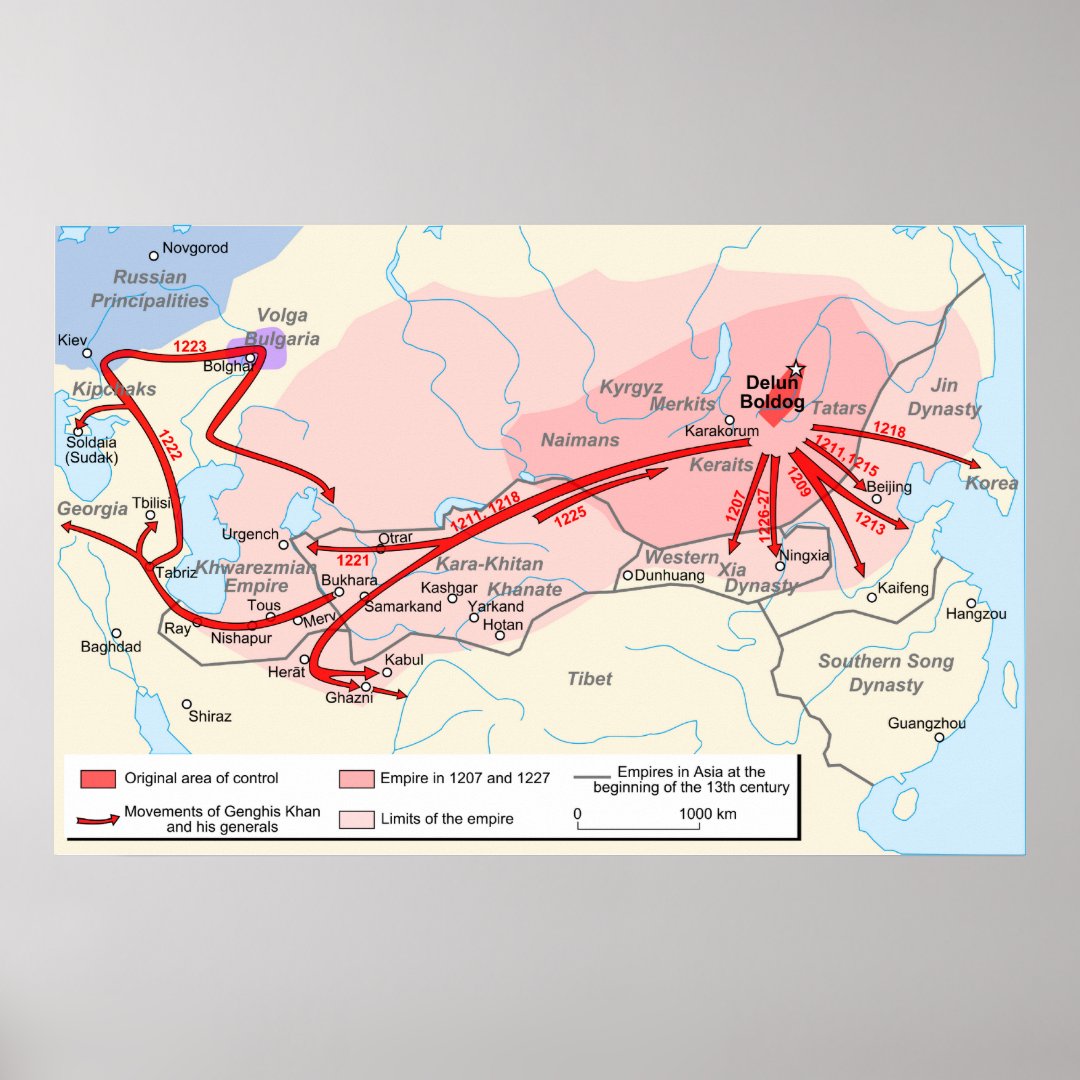
MLA Style. Bkkbrad, . " Map of the Campaigns of Genghis Khan ." World History Encyclopedia. World History Encyclopedia, 16 Sep 2019. Web. 25 Apr 2024. A map illustrating the military campaigns of Genghis Khan (c. 1162/67-1227 CE), ruler and founder of the Mongol Empire (1206-1368 CE).
genghis khan's empire map Google Search Things to know Pinterest Empire, History and

An overview of how the Mongol Empire, founded by Genghis Khan in 1206, eventually becomes the largest contiguous empire in world history before splitting formally into the Yuan Dynasty, Golden Horde, Chagatai Khanate and Ilkhanate.
Are you descended from Genghis Khan? 1 in 200 men alive today have Genghis Khan's DNA HubPages
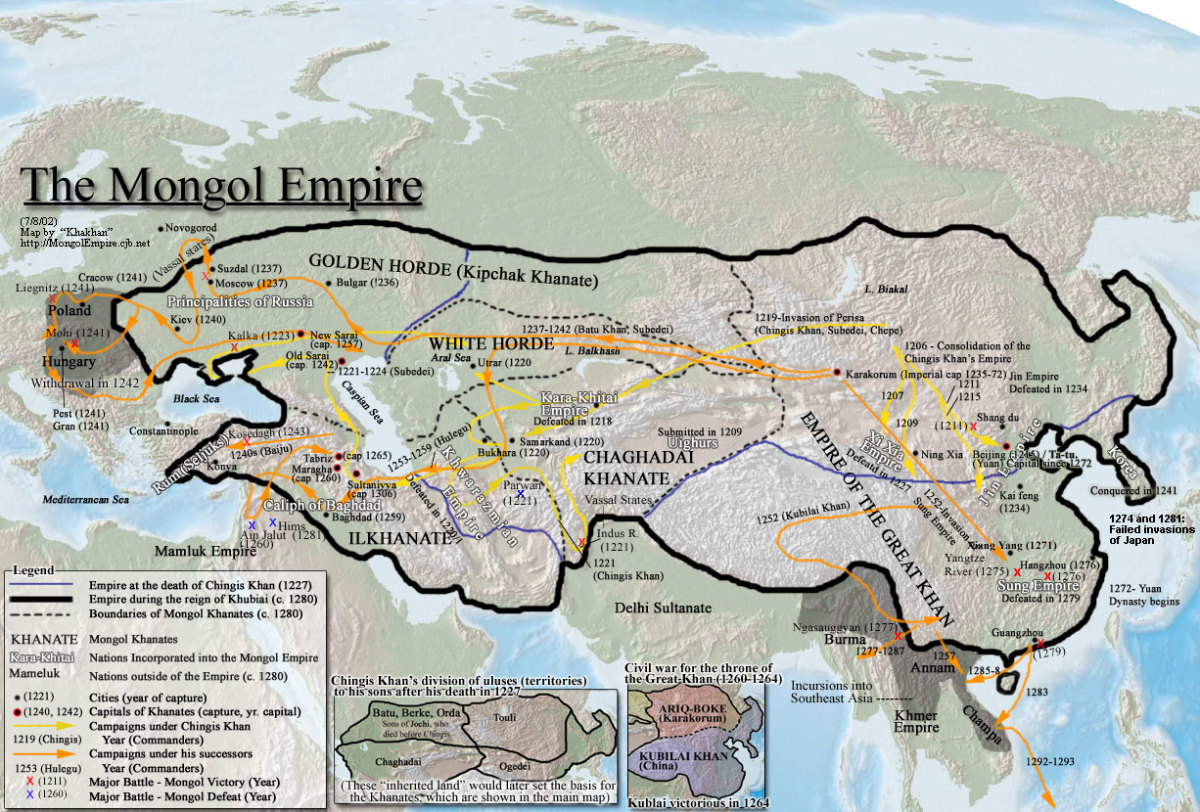
The Mongol empire was founded by Genghis Khan in 1206. It extended from the Pacific Ocean to the Danube River and the Persian Gulf. At its greatest extent, it covered some 9 million square miles of territory, making it the largest contiguous land empire in history. Learn more about the Mongol empire in this article.
mongols

Genghis Khan. Born c. 1162. Died 1227. Mongolian chieftain and conqueror. N o empire in history has ever been as large as that conquered in the 1200s by the Mongols, who began their conquests as a simple nation of shepherds and nomads in Central Asia.What welded them into a mighty fighting force was not a religion, or a political belief, or even a shared need for land or food; it was a man, a.
PPT Modern World History Maps PowerPoint Presentation, free download ID1745075
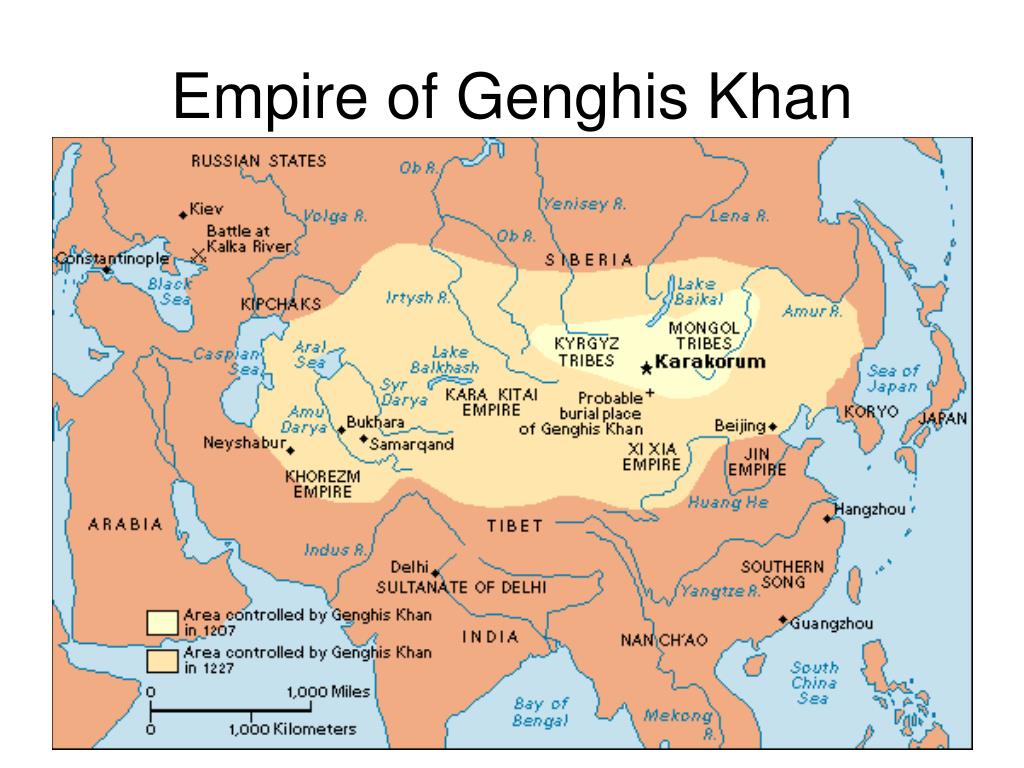
Genghis Khan (born Temüjin; c. 1162 - 25 August 1227), also Chinggis Khan, was the founder and first khan of the Mongol Empire, which he ruled from 1206 until his death in 1227; it later became the largest contiguous empire in history. After spending most of his life uniting the Mongol tribes, he launched a series of military campaigns, conquering large parts of China and Central Asia.
40 AweInspiring Facts About Genghis Khan and the Mongol Empire
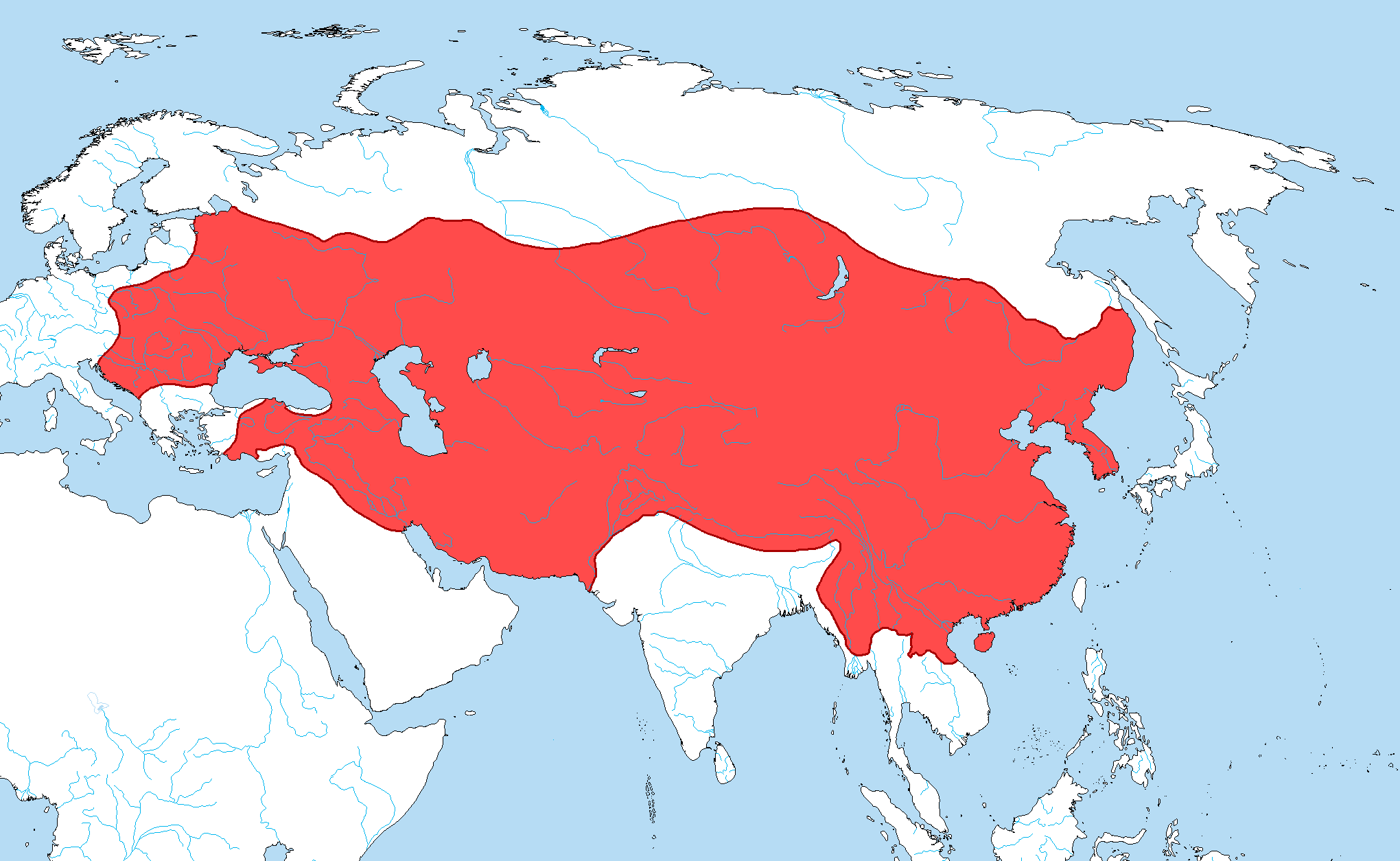
published on 17 March 2020. Through the 13th and 14th century CE the Mongols forged the largest connected empire the world had ever seen and such figures as Genghis Khan and Kublai Khan were feared as the devil himself, their mounted warriors conquering for their leaders territories from Europe to Korea. The Mongols were much more than a superb.
PPT The Mongol Empire PowerPoint Presentation, free download ID9296161
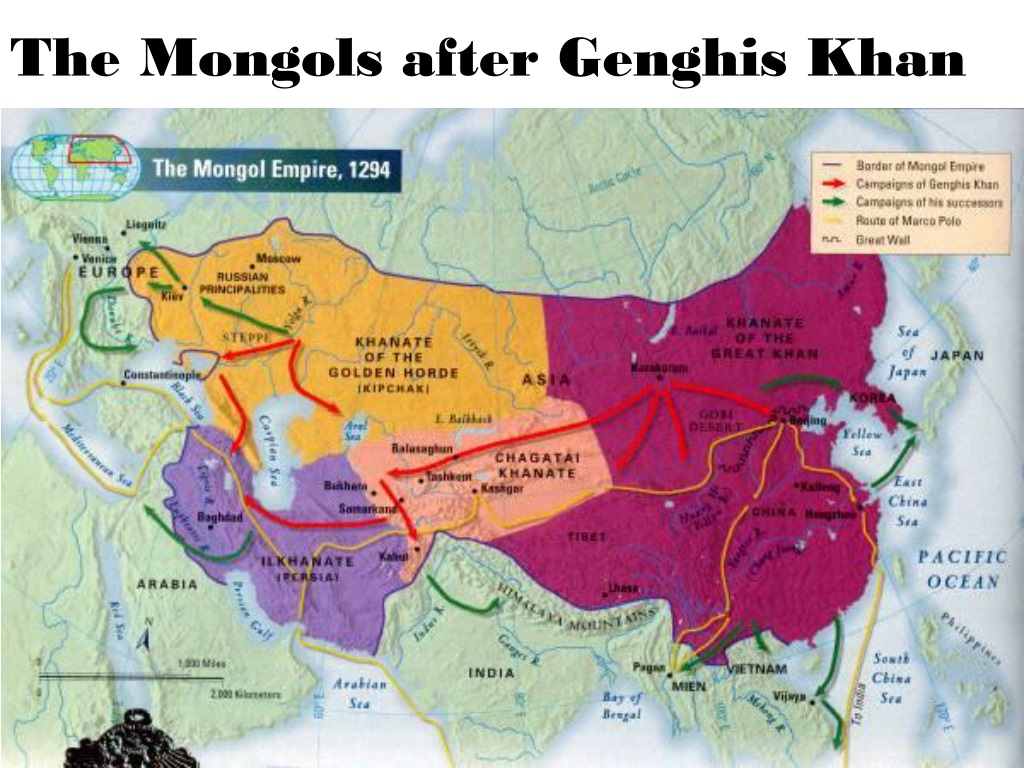
Genghis Khan (born 1162, near Lake Baikal, Mongolia—died August 18, 1227) was a Mongolian warrior-ruler, one of the most famous conquerors of history, who consolidated tribes into a unified Mongolia and then extended his empire across Asia to the Adriatic Sea. Genghis Khan: His journey to power.
Mongolian Folklore and Myth in Fantasy Home of (eventual) author Josh Larkin

Mongol empire - Central Asia, Steppe Warfare, Khanates: During the early stages of Mongol supremacy, the empire established by Genghis absorbed civilizations in which a strong, unified, and well-organized state power had developed. The social organization of the Mongols was, however, characterized by pastoralism and a decentralized patrilineal system of clans.
.