
Why learn German YouTube

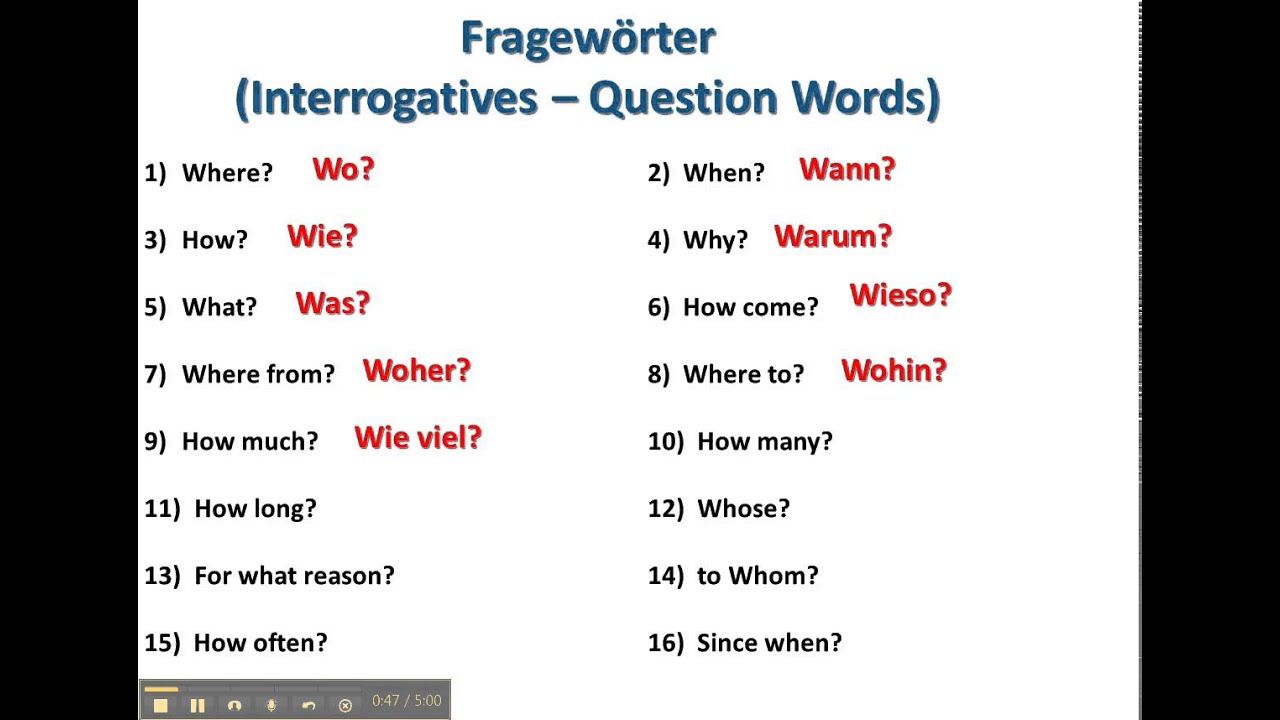
Warum. Why. Wozu. For what purpose. Wieso. How come / why. Believe it or not, German has even more words that are roughly equivalent to "why" in English, such as weshalb (for the sake of what) and weswegen (due to what). These additional "why" words can add some nuance to your questions. If you master warum, wieso, and wozu, though, you.
German Language Basics Pdf
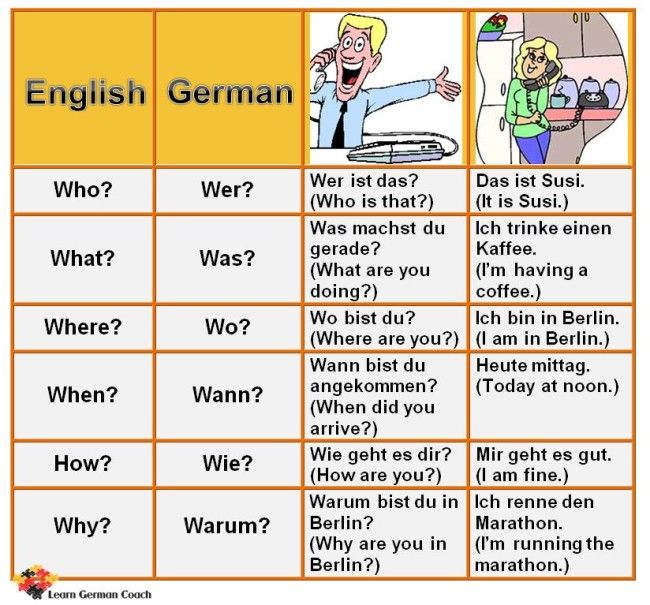
How? Was? What? Wo? Where? Wieviel? How Much? Study with Quizlet and memorize flashcards containing terms like Warum?, Wann?, Wer? and more.
10 reasons why German is such an awesome language

für sich zu belegen, um seine Reise auf dieser Welt noch einmal Revue passieren zu lassen. gld-dazio.ch. gld-dazio.ch. Many translated example sentences containing "who what when where why how" - German-English dictionary and search engine for German translations.
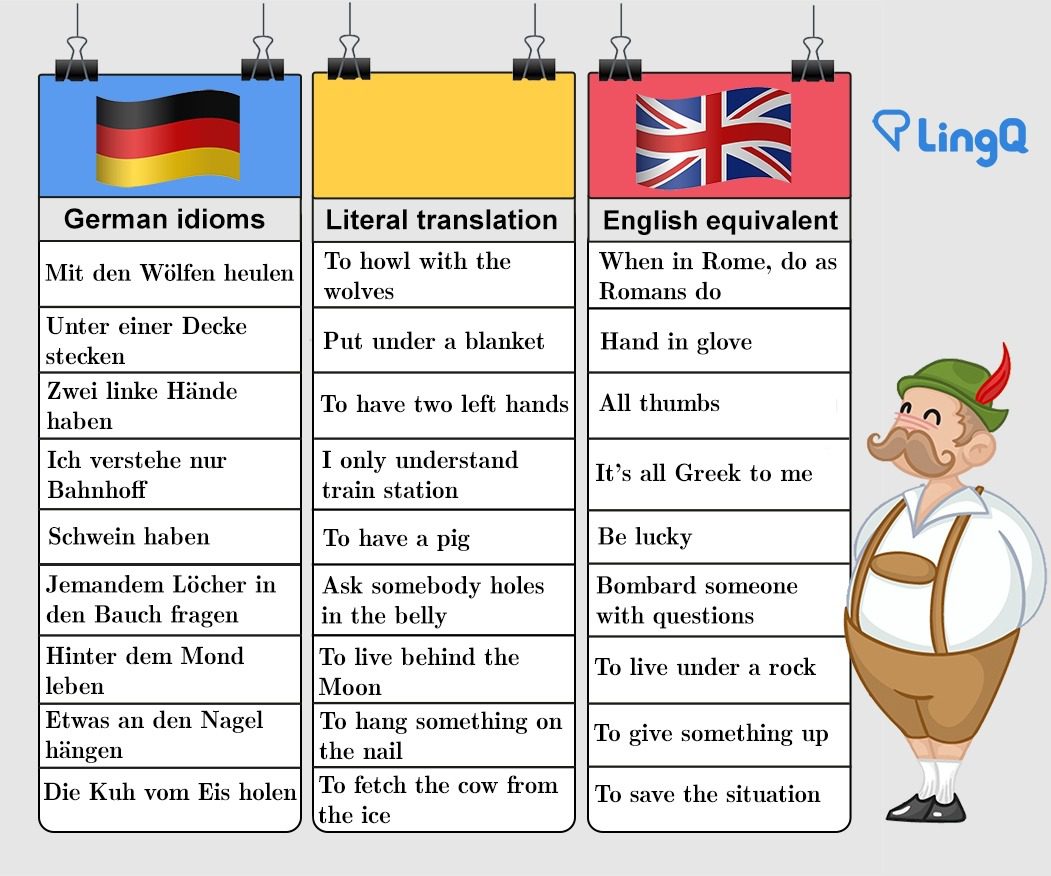
Want Your German to Impress? Learn These German Idioms LingQ Blog
The W-Fragen in German are question words. They are also known as 'open-ended questions. In English the W-Fragen also begin 'w': who, what, when, where, why, and how. You begin learning the W-Fragen at the A1 level in German. (These questions are different from the ja/nein Fragen or yes/no questions in German begin with the verb ("Arbeiten Sie.
Why German Nouns Are Capitalized • Talking Easily German language, German phrases, German

8 Basic German Words for Questions & How to Use them. Using the German question words in this tutorial, you'll be able to ask how much something costs, where someone is from & more to keep a conversation going!
Why learn German
In order to engage with German speakers and get to know people, you'll need to get used to the who, where, why, how, when and what question words in German. Luckily this is quite a straightforward concept in German, and the way questions are asked are very similar to in English. After reading this post you will know: The 9 question words in.
Why German Is A Hell Of A Language To Speak (56 pics)
1. Simply add a question mark to the end of the statement for yes/no questions. 2. Invert the verb and subject for yes/no questions. 3. Add nicht wahr? or oder? to the end of the statement for yes/no questions.
Why German Nouns Are Capitalized • Talking Easily Learn german, German language learning

Many translated example sentences containing "who what when where why" - German-English dictionary and search engine for German translations.
Great Reasons to Learn German! — Niskayuna High School German Program

wer? ( who? warum? ( why? Note that wer means who, NOT where. When questions are formed with interrogative adverbs like wann, wo, wie and warum, normal word order changes and the subject and verb swap places. Wann ist er gekommen? When did he come? Wo willst du hin?
Basic German Question Words learn german made easy
Unit 5. Tigerlilli93. Basic Verbs**. M_Rowehl. Green Line 2: Unit 1 - Story (pp. 214-215) weick-soederblom. Study with Quizlet and memorize flashcards containing terms like Who, What, When and more.
Why Learn German Languages Pathways
Match. Study with Quizlet and memorize flashcards containing terms like wohin, wann, worrum, wieso, weshalb, weswegen and more.
10 reasons why German is such an awesome language German, 10 reasons, Language

Annoyingly, Otto mostly asks himself yes/no questions and then answers them before Jens can say anything. (It's part of the reason Jens asked him to leave Oma's house.) Forming yes/no questions in German is pretty easy. You take a statement (a regular sentence) and flip the subject and the verb to make it a question: STATEMENT.
Why German is Easy Fluent in 3 Months
Study with Quizlet and memorize flashcards containing terms like wie, wo, woher and more.
German 5W Questions, What, Who, Where, when, Why, Boy on Grunge Stock Image Image of person

It took me a lot of my Sprachgefühl (feeling for language) to recognize a slight difference between these four question words, all meaning "why" in English. The words warum and wieso are more, let's say, innocent and open. That is, when you ask a question with warum or wieso you indicate that you don't know whether there is a.
What are the Essential Benefits of Learning German?

If you have ever listened to the German opening of the famous TV series Sesame Street, you might have stumbled upon the following line: "Wieso, weshalb, warum — wer nicht fragt bleibt dumm! ("How come, for what reason, why — if you don't ask you'll stay stupid.") As per usual for the German language, this is a true, but very matter-of-fact—almost blunt—statement.
Telling the Time in German! Examples&Explanations on

Welcher? (Which?) Gibt es . . .? (Is/Are there . . .?) In German, you can form questions by reversing the subject noun/pronoun and conjugated verb. See how these question words work in a few useful phrases: Hast du Geld? [S/Informal] (Do you have money?) Sprechen Sie gut Deutsch?
.